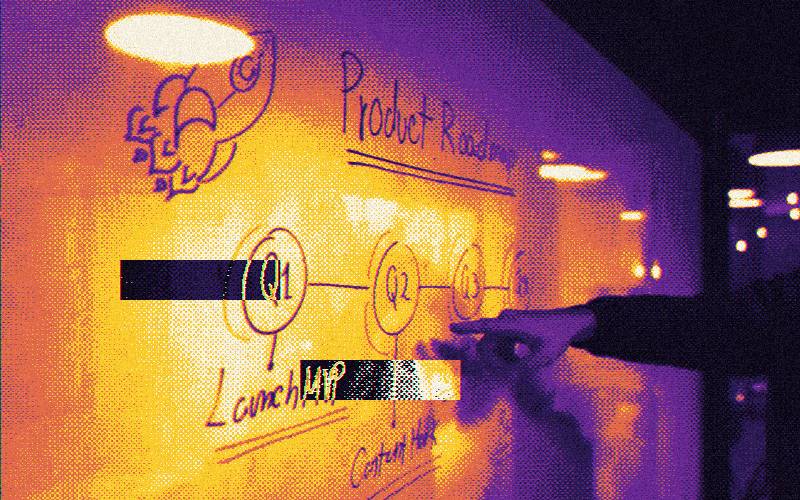

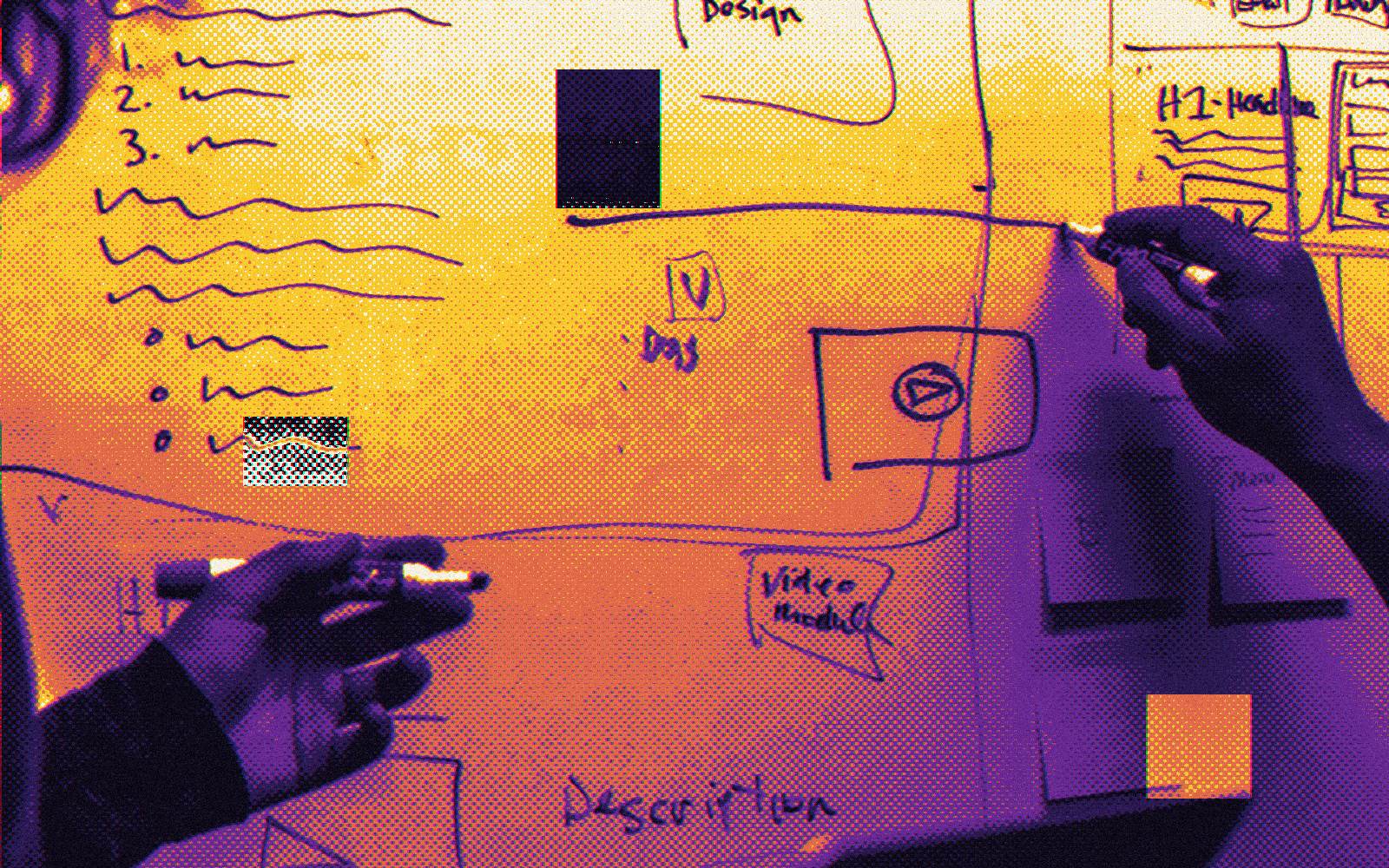
Begin with the problem
A feature list grows easily and shrinks painfully. A problem statement does the opposite. Write one sentence: "[Type of user] struggles to [do something] because [reason], and wants [outcome]." Every feature must earn its place against that sentence.
Map the journey, then cut
Draw the full journey
From the moment the user has the problem to the outcome they want.
Mark the essential steps
Which steps must exist for the user to reach the outcome at all?
Find the thinnest path
The simplest route through those steps, even if some parts are manual.
Park everything else
List the rest as later. Do not delete the ideas, just delay them.
Doing part of the work by hand behind the scenes is a legitimate way to test an idea before you build the system.
List your risky assumptions
| Type | Question | Test |
|---|---|---|
| Desirability | Do people want this? | Interviews, landing page, pre-signups |
| Usability | Can people use it? | Usability tests with a prototype |
| Feasibility | Can we build it? | A technical spike |
| Viability | Will it make money? | Pricing tests, paid pilots |
Put the riskiest assumption first. If it fails, the rest does not matter.
Use a simple filter
- Does this feature help the user reach the core outcome?
- Will the MVP still make sense without it?
- Can it be done manually or with an existing tool for now?
- Does it test a risky assumption?
If the answers are no, no, yes, no, it can wait.
Hold the line
Scope creeps in small requests. Keep a visible "later" list, and review it after launch with real data. Many of those features will turn out to be unnecessary, which is the point of waiting.